

The 1966 Chevrolet Chevelle SS represents a pivotal moment in muscle car history, offering a blend of style, performance, and affordability that captivated enthusiasts.
Comprehensive repair manuals, including those covering Biscayne, Bel Air, and Corvette models, are readily available, often in CD format, providing detailed guidance for restoration.
Assembly manuals specifically for the Chevelle, Malibu, and El Camino are also accessible, detailing wiring diagrams, torque specifications, and even handwritten revision notes for authenticity.
Overview of the Model Year
The 1966 model year for the Chevrolet Chevelle SS marked a significant evolution, establishing it as a formidable competitor in the burgeoning muscle car segment. Offered in a variety of body styles – including coupes and convertibles – the Chevelle SS quickly gained popularity due to its attractive design and potent engine options.
Owners seeking to restore or maintain their vehicles benefit from readily available resources like complete, unabridged repair shop service manuals, covering a broad spectrum of Chevrolet models from Biscayne to Corvette. These manuals, often found on CD, provide invaluable insights into every aspect of the vehicle. Furthermore, dedicated assembly manuals for the Chevelle, Malibu, and El Camino offer detailed diagrams and specifications, aiding in accurate restoration efforts. These resources include crucial information like wiring diagrams and torque specifications, ensuring authenticity and proper functionality.
Significance of the 1966 Chevelle SS
The 1966 Chevelle SS holds a crucial place in automotive history, representing a key step in the evolution of the American muscle car. It wasn’t simply a performance upgrade; it was a statement of style and attainable power that resonated with a generation. The availability of comprehensive repair documentation, like the complete 1966 Chevrolet repair shop service manual – covering models from Biscayne to Corvette – underscores the vehicle’s enduring appeal and the dedication of its enthusiasts.
The detailed assembly manuals for the Chevelle, Malibu, and El Camino, complete with wiring diagrams and torque specifications, demonstrate the manufacturer’s commitment to serviceability and the continued viability of restoration projects. This wealth of information ensures that the legacy of the 1966 Chevelle SS remains vibrant, allowing future generations to appreciate its significance.
Engine Specifications and Performance
The 1966 Chevelle SS offered a range of engines – 283, 327, and the powerful 396 – each contributing to its impressive performance capabilities and driver experience.
Available Engine Options (283, 327, 396)
For the 1966 Chevrolet Chevelle SS, buyers had a compelling selection of engine options, catering to diverse performance preferences and budgets. The base engine was a 283 cubic inch V8, offering a solid foundation for spirited driving. Stepping up, the 327 cubic inch V8 provided a noticeable increase in horsepower and torque, becoming a popular choice for those seeking enhanced performance.
However, the pinnacle of power resided in the legendary 396 cubic inch V8. This big-block engine transformed the Chevelle SS into a true muscle car contender, delivering exhilarating acceleration and a commanding presence on the road. Detailed specifications and repair information for each engine are comprehensively covered in the 1966 Chevrolet repair manuals, available in CD format, ensuring accurate restoration and maintenance. These manuals cover a broad range of Chevrolet models, including the Biscayne, Bel Air, and Corvette, alongside the Chevelle.
Horsepower and Torque Figures
The 1966 Chevrolet Chevelle SS boasted impressive horsepower and torque figures, varying significantly based on the chosen engine. The 283 cubic inch V8 typically produced around 195 to 220 horsepower, coupled with approximately 280 to 300 lb-ft of torque, offering respectable performance for its time. The 327 cubic inch engine elevated these numbers, delivering between 250 and 350 horsepower, and 310 to 360 lb-ft of torque.
However, the 396 cubic inch V8 truly defined the SS’s muscle car credentials. Depending on the specific configuration, it generated a formidable 325 to 375 horsepower, and a substantial 410 to 440 lb-ft of torque. Detailed torque specifications and horsepower ratings are meticulously documented within the comprehensive 1966 Chevrolet repair shop service manuals, available on CD, covering models like the Biscayne, Impala, and Corvette, alongside the Chevelle.
Transmission Choices (Manual & Automatic)
The 1966 Chevrolet Chevelle SS offered buyers a choice between manual and automatic transmissions, catering to diverse driving preferences. A standard three-speed manual transmission was available, providing a direct connection for those seeking maximum control. However, the majority of Chevelle SS models were equipped with automatic transmissions, specifically the two-speed Powerglide or the more sophisticated four-speed Turbo Hydra-Matic.
The four-speed manual transmission was also an option, favored by enthusiasts for its performance capabilities. Detailed diagrams and repair procedures for all transmission types are thoroughly outlined in the 1966 Chevrolet repair shop service manual, found on CD and covering a wide range of models including the Biscayne and Corvette. These manuals include torque specifications and wiring diagrams essential for accurate restoration and maintenance, ensuring proper functionality.
Restoration and Maintenance
Restoring a 1966 Chevelle SS demands locating original parts, utilizing assembly manuals, and referencing the Chevrolet repair shop service manual for accurate guidance.
Locating Original Parts and Resources
Sourcing authentic 1966 Chevelle SS parts requires diligent effort, as availability can be limited. Online marketplaces specializing in classic car components are excellent starting points, alongside dedicated Chevelle forums and clubs where enthusiasts often trade or sell rare finds.
Reputable restoration parts suppliers frequently carry reproduction components, but discerning collectors prioritize original, date-coded pieces whenever possible. Complete, unabridged 1966 Chevrolet repair manuals, often available on CD, provide detailed parts diagrams and identification numbers, aiding in accurate sourcing.
Furthermore, assembly manuals for the Chevelle, Malibu, and El Camino offer valuable insights into original component placement and specifications. Don’t underestimate the power of attending classic car shows and swap meets – these events can yield unexpected treasures and connect you with knowledgeable individuals.
1966 Chevelle SS Assembly Manual Information
The 1966 Chevelle and El Camino Assembly Manual Reprint is an invaluable resource for restorers, offering a detailed, step-by-step visual guide to how these vehicles were originally constructed. These manuals meticulously illustrate component placement, fastener types, and assembly sequences, crucial for achieving factory-correct restorations.
Beyond the visual aids, these manuals often include handwritten revision records, providing insights into mid-production changes and variations. They cover the Chevelle, Malibu, and El Camino models, detailing everything from body panel alignment to interior trim installation.
Access to these resources, alongside comprehensive repair manuals, empowers enthusiasts to confidently tackle restoration projects, ensuring authenticity and preserving the legacy of this iconic muscle car. Understanding these details is paramount for a successful restoration.
Using the 1966 Chevrolet Repair Shop Service Manual
The Complete and Unabridged 1966 Chevrolet Repair Shop & Service Manual CD is a cornerstone for any Chevelle SS restoration or maintenance project. This comprehensive resource covers a wide range of models – Biscayne, Bel Air, Impala, Super Sport, Chevelle, Malibu, SS 396, El Camino, Chevy II, Nova, and Corvette – offering detailed procedures for virtually every repair.
Within its pages, you’ll find detailed diagrams, troubleshooting guides, and precise specifications, enabling even novice mechanics to confidently address complex issues. The manual’s breadth extends to electrical systems, chassis components, and engine overhauls.
Proper utilization of this manual, alongside assembly manuals, ensures accurate repairs and preserves the vehicle’s original integrity, making it an indispensable tool for any enthusiast.
Chassis and Suspension
The 1966 Chevelle SS chassis utilized robust suspension components, detailed in the 1966 Chassis Service Manual, ensuring a balance of handling and ride quality.
Front Suspension Components
The 1966 Chevelle SS’s front suspension employed an independent design, featuring unequal-length control arms, coil springs, and a stabilizer bar – crucial for handling. Detailed within the 1966 Chevrolet repair manuals, understanding these components is vital for restoration. The upper and lower control arms connect the wheel spindle to the frame, allowing for controlled movement.
Coil springs provide the primary suspension rate, absorbing road impacts. The stabilizer bar, or anti-roll bar, reduces body roll during cornering, enhancing stability. Inspecting bushings, ball joints, and tie rod ends is essential during maintenance, as wear significantly impacts steering and handling. Correct torque specifications, found in the service manual, are paramount when reassembling these components. Proper alignment, following the manual’s guidelines, ensures optimal tire wear and vehicle performance.
Rear Suspension Components
The 1966 Chevelle SS utilized a traditional leaf spring rear suspension, offering a balance of simplicity and durability. As detailed in the 1966 Chevrolet repair manuals, this system consists of multi-leaf springs, shock absorbers, and a solid rear axle. The leaf springs support the vehicle’s weight and absorb road impacts, while shock absorbers dampen oscillations for a smoother ride.
U-bolts secure the leaf springs to the rear axle, requiring precise torque specifications during reassembly – found within the service manual. Inspecting leaf spring condition for cracks or sagging is crucial. Additionally, check shock absorber functionality for leaks or excessive bounce. Proper alignment of the rear axle, though less adjustable than the front, is still important for tire wear and straight-line tracking. Maintaining these components ensures optimal handling and ride quality, mirroring the original factory setup.
Braking System Details

The 1966 Chevelle SS typically featured a drum brake system on all four wheels, though power assist was a popular option. Detailed within the 1966 Chevrolet repair shop service manual, the system relies on hydraulic pressure to activate the brakes. Inspecting brake lines for leaks and corrosion is paramount, alongside checking the master cylinder for proper fluid levels and internal wear.
Drum brake service involves inspecting and potentially replacing brake shoes, wheel cylinders, and drums. Adjusting the brake shoes for proper clearance is vital for efficient stopping power. The manual provides torque specifications for all brake components. Remember to bleed the brake lines after any service to remove air bubbles, ensuring a firm pedal feel. Maintaining a properly functioning braking system is critical for safety and performance, adhering to original specifications.
Body and Exterior
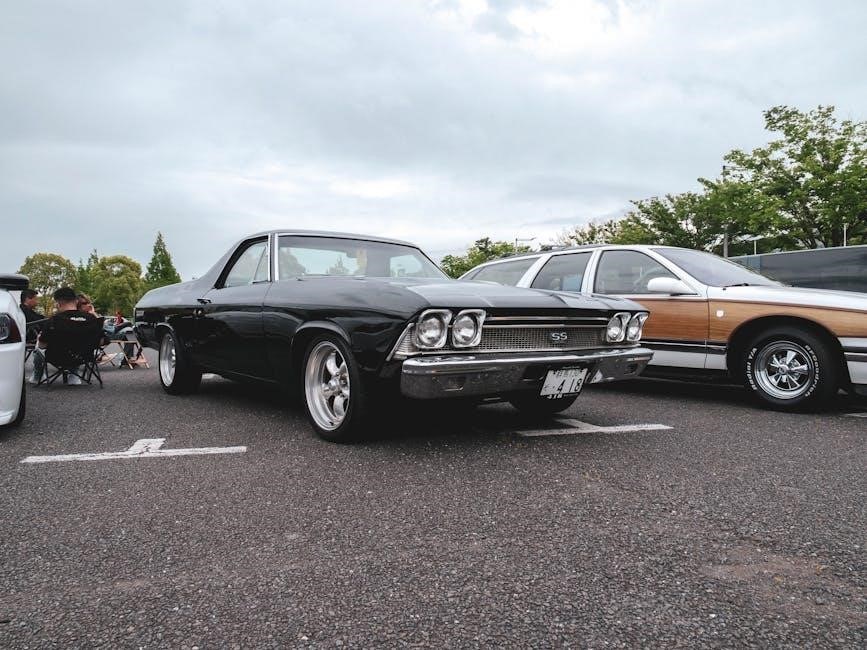
Authentic SS features demand careful inspection, focusing on trim, badging, and specific body lines detailed in assembly manuals for accurate restoration work.
Identifying Authentic SS Features
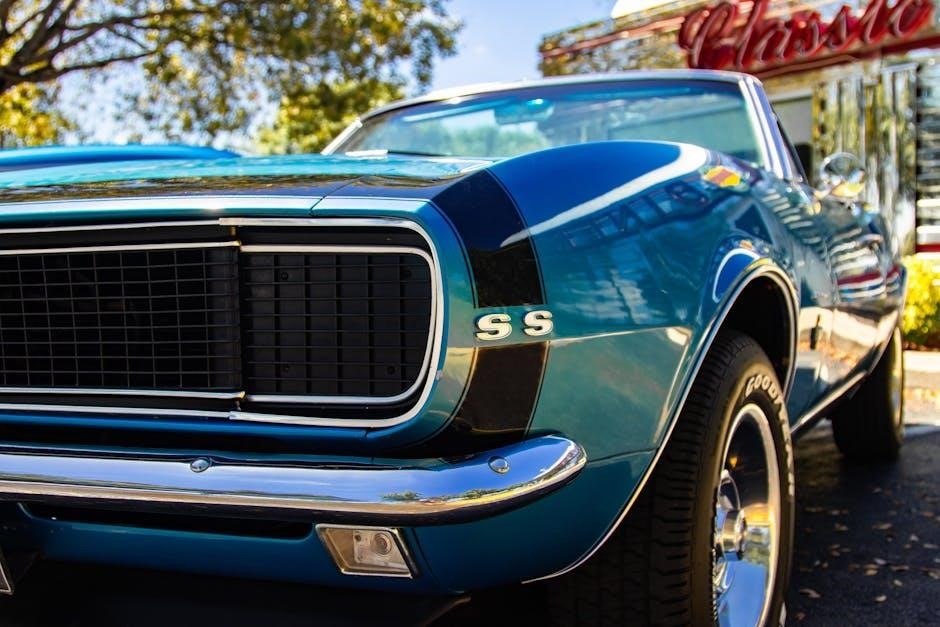
Distinguishing a genuine 1966 Chevelle SS requires meticulous attention to detail, as many components were available across various Chevrolet models. The SS package included specific exterior enhancements, such as a blacked-out grille, simulated air scoops on the hood, and unique SS badging on the fenders and rear panel.
Furthermore, correct identification involves verifying the presence of a specific trim package and confirming the vehicle’s original build sheet or documentation. Assembly manuals are invaluable resources, illustrating the correct placement and style of these exterior features. Pay close attention to the details – the correct font for the SS emblems, the specific pattern of the grille, and the finish of the trim all contribute to authenticity.
Reproduction parts are readily available, but discerning collectors prioritize original components whenever possible, relying on detailed guides and expert knowledge to ensure accuracy.
Paint Codes and Color Options
Original 1966 Chevelle SS color selection was diverse, offering a range of both vibrant and understated hues. Identifying the factory-applied color requires deciphering the paint code typically found on the car’s trim tag, located on the cowl or door jamb. These codes correspond to specific color names and formulations used by Chevrolet during that model year.
Commonly available colors included shades of red, blue, green, black, and white, with varying degrees of metallic finish. Restoration efforts demand accurate color matching, necessitating the use of paint codes and referencing original Chevrolet documentation. Modern paint suppliers can often recreate these original colors using the correct formulas.
Ensuring the correct paint code is crucial for maintaining the vehicle’s historical accuracy and value, contributing significantly to a faithful restoration.
Restoring the Exterior Trim
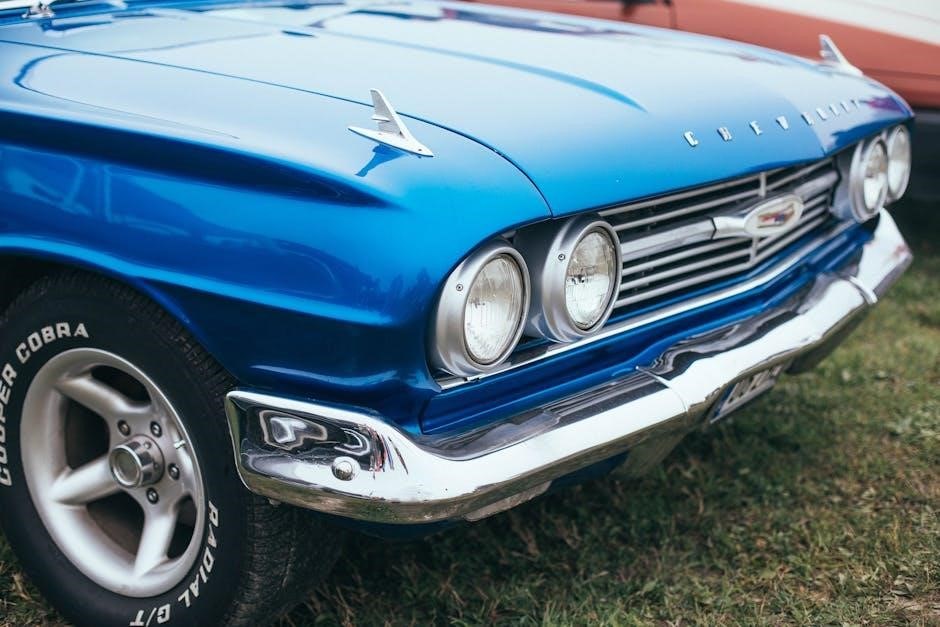
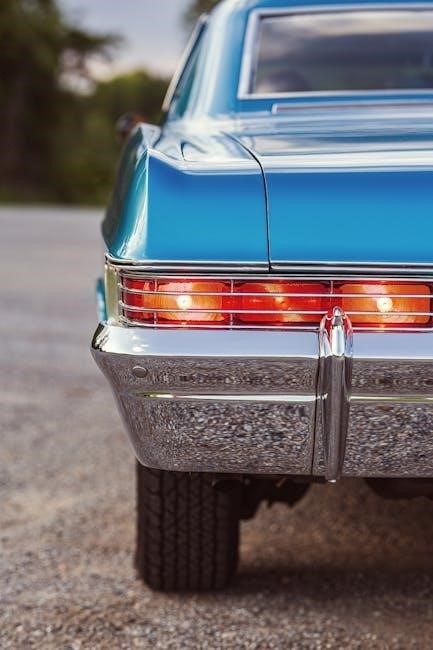
The 1966 Chevelle SS’s exterior trim is integral to its iconic appearance, demanding careful attention during restoration. Brightwork, including bumpers, window frames, and grille components, often requires polishing to remove oxidation and restore shine. Dents and imperfections may necessitate professional metalworking or replacement with reproduction parts.
Original trim pieces can be sourced from specialized vendors or salvaged from donor vehicles, though condition varies. Correctly identifying and reinstalling all trim components, using original fasteners where possible, is vital for authenticity. Attention to detail, such as proper alignment and secure mounting, significantly enhances the finished look.
Detailed assembly manuals provide valuable guidance on trim placement and attachment methods, ensuring a factory-correct restoration.
Interior Details
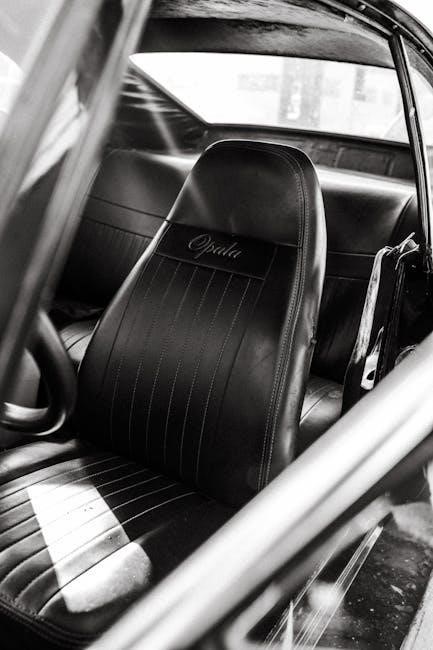
The 1966 Chevelle SS interior demands accurate upholstery and trim codes for faithful restoration, alongside original radio and accessory options for period correctness.
Upholstery and Interior Trim Codes
Decoding the interior trim codes is crucial for an authentic 1966 Chevelle SS restoration. These codes, typically found on the car’s trim tag, dictate the original color and material of the upholstery, carpeting, and headliner. Understanding these designations ensures accuracy when replacing worn components.
For example, a code might specify a black vinyl interior with a bench seat, while another indicates a red cloth interior with bucket seats. Resources detailing these codes are available through restoration guides and online forums dedicated to classic Chevrolet vehicles. Correctly identifying the original interior scheme preserves the car’s historical integrity and value.
Furthermore, paying attention to the specific patterns and stitching details used in 1966 is essential. Replicating these nuances contributes significantly to a high-quality, concours-level restoration. Accurate trim codes guarantee a faithful recreation of the original factory interior.
Dashboard and Instrument Cluster Information
The 1966 Chevelle SS dashboard and instrument cluster present unique restoration challenges. Originality hinges on accurately replicating the gauge faces, lenses, and bezels. Detailed repair manuals, like the comprehensive 1966 Chevrolet service manual, provide exploded views and assembly instructions for these components.
Pay close attention to the correct colors and markings on the gauges. Variations existed depending on the engine and transmission options. Wiring diagrams within the service manual are vital for ensuring proper functionality of all instruments, including the speedometer, fuel gauge, and temperature gauge.
Restoration often involves cleaning, repairing, or replacing the original components. Sourcing correct replacement parts is key to maintaining authenticity. Careful attention to detail during reassembly guarantees a functional and visually accurate dashboard.
Original Radio and Accessory Options
The 1966 Chevelle SS offered a range of original radio and accessory options, enhancing the driving experience. Available radios included AM push-button models, and some featured optional FM capabilities. Detailed service manuals provide wiring diagrams crucial for correct installation and functionality.
Beyond the radio, accessories like a factory air conditioner, power steering, and power brakes were available. These options significantly impacted the vehicle’s value and desirability today. Restoration requires locating correct, date-coded components.
Accessory brackets and mounting hardware must match original specifications. Comprehensive repair manuals, covering models like the Biscayne and Impala, often contain information applicable to the Chevelle SS. Accurate restoration of these details contributes significantly to the vehicle’s authenticity and overall appeal.
Electrical System
The 1966 Chevelle SS electrical system demands careful attention during restoration; detailed wiring diagrams are essential, found within comprehensive service manuals covering multiple Chevrolet models.
Wiring Diagrams Overview
Understanding the 1966 Chevelle SS’s electrical system begins with accessing accurate wiring diagrams. Fortunately, complete and unabridged 1966 Chevrolet repair shop and service manuals, often available on CD, encompass diagrams for the Biscayne, Bel Air, Impala, Super Sport, Chevelle, Malibu, SS 396, El Camino, Chevy II, Nova, and Corvette.
These diagrams are crucial for tracing circuits, identifying components, and correctly restoring the factory wiring harness. They detail the connections for everything from the headlights and taillights to the ignition system and radio. The manuals also frequently include handwritten revision records, offering insights into factory modifications and corrections. Successfully navigating these diagrams requires patience and a systematic approach, carefully following each wire’s path and noting its color coding. Proper restoration relies heavily on these detailed visual guides.
Troubleshooting Common Electrical Issues
Electrical gremlins are common in classic 1966 Chevelle SS restorations. Utilizing a comprehensive 1966 Chevrolet repair shop and service manual is paramount. Frequent issues include dim headlights, faulty turn signals, and non-functioning gauges. Begin by checking grounds – corrosion is a major culprit. Inspect wiring for breaks or shorts, referencing the detailed wiring diagrams found in the service manuals.
The original battery and charging system specifications, detailed within these manuals, are vital for diagnosing charging problems. A failing voltage regulator or alternator can cause a range of symptoms. Remember to consult the diagrams when tracing circuits. Carefully examine connections and replace any damaged components. Patience and methodical testing, guided by the manual, are key to resolving these issues effectively.
Original Battery and Charging System Specs
The 1966 Chevelle SS typically utilized a 12-volt electrical system. Original battery specifications generally called for a Group 75 battery with a Cold Cranking Amps (CCA) rating around 550-600. The charging system consisted of a generator, regulated by a voltage regulator, maintaining approximately 13.8-14.2 volts.
Detailed specifications, crucial for accurate restoration, are comprehensively documented within the 1966 Chevrolet repair shop service manual. This manual outlines amperage output, pulley ratios, and proper wiring configurations. Ensuring correct voltage regulation is vital to prevent overcharging or undercharging, impacting battery life and electrical component performance. Referencing these original specs guarantees a period-correct and reliably functioning charging system, essential for a properly restored Chevelle SS.