
Understanding Pulse Oximeter Readings: A Comprehensive Guide
Locating readily available pulse oximeter readings charts in PDF format empowers individuals to effectively monitor and interpret their oxygen saturation levels with confidence.
What is a Pulse Oximeter?
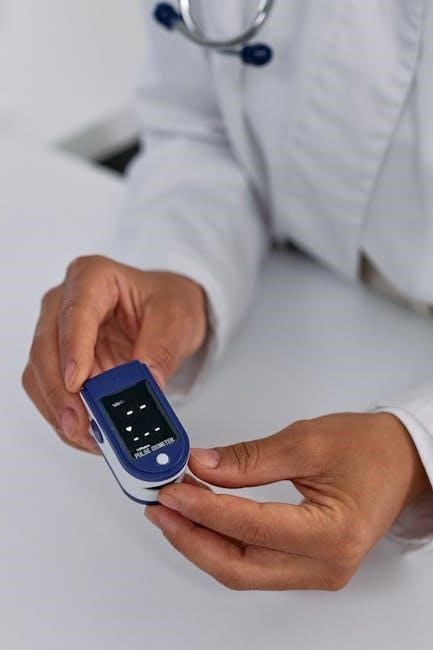
A pulse oximeter is a small, non-invasive device designed to measure the oxygen saturation level in your blood, and your pulse rate. It’s a crucial tool for monitoring respiratory health, particularly for individuals with conditions like asthma, COPD, or during recovery from illnesses affecting breathing. While understanding the device itself is important, knowing how to interpret the results – often aided by a pulse oximeter readings chart – is equally vital.
These charts, frequently available as PDF downloads from reputable medical sources, provide a quick reference guide to determine if your readings fall within a normal, concerning, or critical range. They typically display SpO2 (oxygen saturation) levels against corresponding pulse rates, offering a comprehensive overview of your respiratory status. Accessing and familiarizing yourself with such a chart can empower you to proactively manage your health and seek timely medical attention when necessary. Remember, a chart is a guide, and professional medical advice is always paramount.
How Does a Pulse Oximeter Work?
Pulse oximeters utilize light to estimate the amount of oxygen carried in your red blood cells. A sensor, typically clipped onto a fingertip or earlobe, emits beams of red and infrared light. These lights pass through the skin and are detected by a photodetector on the other side. Oxygenated and deoxygenated hemoglobin absorb different amounts of these light wavelengths.
By analyzing the varying absorption rates, the device calculates your SpO2 level. Understanding this process is helpful when interpreting readings, especially when referencing a pulse oximeter readings chart – often found as a convenient PDF resource. These charts correlate SpO2 percentages with potential health implications. However, remember that the oximeter doesn’t directly measure oxygen levels; it estimates them. Therefore, a chart serves as a guide, and clinical evaluation remains essential for accurate diagnosis and treatment.
Key Components of a Pulse Oximeter
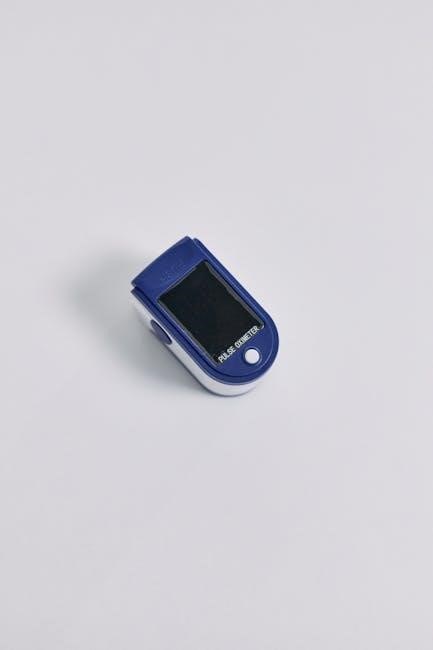
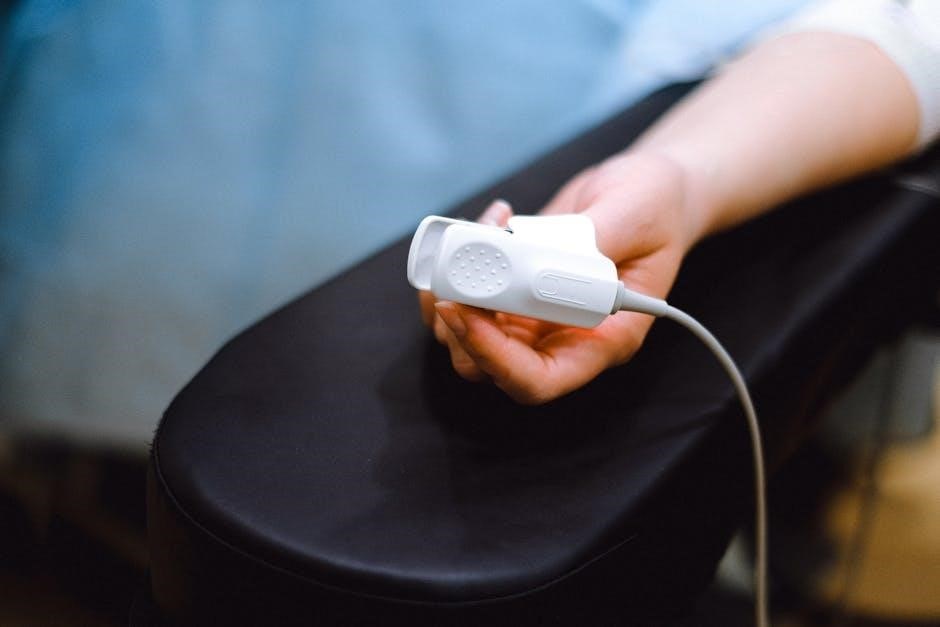
A pulse oximeter comprises several crucial components working in harmony. These include light-emitting diodes (LEDs) that generate red and infrared light, a photodetector to measure the light passing through the tissue, a microprocessor to process the data and calculate SpO2 and pulse rate, and a display screen to show the readings. The sensor itself, often a fingertip clip, ensures proper light transmission.
When reviewing a pulse oximeter readings chart – frequently available as a downloadable PDF – understanding these components provides context. The chart displays expected SpO2 ranges, but the accuracy of those readings relies on the proper functioning of each oximeter part. Factors like sensor placement and ambient light can influence results, making chart interpretation more nuanced. Therefore, a reliable device and correct usage are paramount for meaningful data analysis alongside the chart.
Interpreting Pulse Oximeter Readings
Utilizing a pulse oximeter readings chart, often found as a PDF, aids in understanding oxygen saturation and pulse rate values, promoting informed health assessments.
SpO2: Oxygen Saturation Explained
SpO2 represents the percentage of hemoglobin in your red blood cells carrying oxygen. A pulse oximeter readings chart, frequently available as a PDF download, visually demonstrates healthy versus concerning SpO2 ranges. These charts typically categorize readings: 95-100% is considered normal for most healthy individuals, while values below 90% suggest hypoxemia, potentially requiring medical intervention.
Understanding these charts is crucial because SpO2 isn’t a static number; it fluctuates with activity and underlying health conditions. A PDF chart often includes color-coded zones – green for normal, yellow for moderate concern, and red for critical levels. Referencing such a chart alongside your readings empowers you to track trends and identify potential issues early. Remember, a chart is a guide, and individual circumstances may necessitate different interpretations, always consulting a healthcare professional for personalized advice.
Pulse Rate: What’s Considered Normal?
Pulse rate, measured in beats per minute (BPM), reflects how many times your heart beats. A pulse oximeter readings chart, often found as a downloadable PDF, frequently incorporates normal pulse rate ranges alongside SpO2 levels. Generally, a resting pulse rate between 60-100 BPM is considered normal for adults. However, this range varies based on age, fitness level, and medication.
PDF charts often delineate ranges for different age groups, highlighting what’s typical for children and infants. Elevated pulse rates can indicate fever, dehydration, or anxiety, while unusually low rates might suggest underlying heart conditions. Using a chart helps contextualize your readings, but remember it’s a general guide. Consistent deviations from your baseline, even within the “normal” range, warrant medical evaluation. Always consult a healthcare provider for personalized interpretation and guidance.
Factors Affecting Pulse Oximeter Accuracy
While pulse oximeter readings charts (often available as a PDF download) provide reference points, several factors can compromise accuracy. Poor circulation, stemming from conditions like peripheral artery disease or low blood pressure, can yield falsely low readings. Nail polish, particularly dark colors, and artificial nails interfere with light transmission, impacting results.
Skin pigmentation can also play a role; darker skin tones may require careful device placement and interpretation. Motion artifact – movement during measurement – is a common source of error. Ambient light, carbon monoxide poisoning, and even certain medical dyes can influence readings. A PDF chart won’t account for these variables. Therefore, understanding these limitations is crucial for responsible self-monitoring and accurate assessment, always verifying with a healthcare professional when concerns arise.
Normal Pulse Oximeter Readings
Consulting a pulse oximeter readings chart, often found as a convenient PDF, helps establish baseline expectations for healthy oxygen saturation and pulse rate ranges.
Normal SpO2 Levels for Adults
Utilizing a detailed pulse oximeter readings chart, frequently available as a downloadable PDF resource, is crucial for understanding expected SpO2 values in adults. Generally, a normal oxygen saturation level for healthy adults falls between 95% and 100%. However, values between 90% and 94% are often considered acceptable, particularly for individuals with certain underlying health conditions, such as chronic obstructive pulmonary disease (COPD).
These charts visually represent the correlation between SpO2 percentages and corresponding oxygen levels in the blood, aiding in quick interpretation. A PDF chart allows for easy reference and printing. It’s important to remember that slight variations can occur due to factors like altitude and individual physiological differences. Regularly reviewing a pulse oximeter readings chart empowers individuals to proactively monitor their respiratory health and identify potential deviations from their personal baseline, prompting timely medical evaluation if necessary. Always consult a healthcare professional for personalized guidance.
Normal SpO2 Levels for Children
Accessing a pediatric-specific pulse oximeter readings chart, often found as a convenient PDF download, is vital for accurately assessing oxygen saturation in children. Normal SpO2 levels generally differ from those of adults. For most healthy children, a reading between 95% and 100% is considered normal. However, acceptable ranges can vary based on age and individual health status.
A PDF chart clearly illustrates these age-related differences, providing a quick reference guide for parents and caregivers. Infants, for example, may have slightly lower normal ranges than older children. Consistent monitoring using a chart helps identify potential respiratory distress early on. It’s crucial to remember that these charts are guides, and any concerning readings should be promptly discussed with a pediatrician. Utilizing a reliable pulse oximeter readings chart empowers informed decision-making regarding a child’s respiratory well-being and facilitates timely medical intervention when needed.
Normal Pulse Rate Ranges by Age
Comprehensive pulse oximeter readings charts, frequently available as PDF documents, often include corresponding normal pulse rate ranges alongside SpO2 levels. Understanding these ranges, which vary significantly with age, is crucial for a complete assessment. Newborns typically have pulse rates between 100-160 bpm, gradually decreasing as they age.
Infants exhibit rates of 80-120 bpm, while toddlers range from 70-110 bpm. School-aged children generally fall between 60-100 bpm, and adolescents approach adult rates of 60-80 bpm. A well-designed PDF chart visually presents these age-specific norms, aiding quick interpretation. It’s important to note that activity level, emotional state, and body size can influence pulse rate. Therefore, a pulse oximeter readings chart serves as a valuable reference, but clinical judgment remains paramount. Consistent monitoring and comparison to age-appropriate norms, as detailed in the chart, support proactive health management.

Low Pulse Oximeter Readings (Hypoxemia)
Utilizing a pulse oximeter readings chart in PDF format helps identify hypoxemia, guiding individuals to understand concerningly low oxygen saturation levels and seek help.
SpO2 Below 90%: Causes and Concerns
When a pulse oximeter consistently registers an SpO2 level below 90%, it signals hypoxemia – a potentially serious condition indicating insufficient oxygen in the blood. A pulse oximeter readings chart (often available as a PDF download) can visually demonstrate this concerning range, highlighting the deviation from normal values. Several factors can contribute to low SpO2, including respiratory illnesses like pneumonia or asthma, chronic lung conditions such as COPD, and even altitude sickness.
Furthermore, heart problems, severe anemia, and certain medications can also impact oxygen saturation. Concerns arise because prolonged hypoxemia can lead to organ damage, particularly affecting the brain and heart. Symptoms may include shortness of breath, confusion, rapid heartbeat, and bluish discoloration of the skin (cyanosis). Regularly referencing a PDF chart alongside readings allows for proactive monitoring and timely intervention, emphasizing the importance of understanding what constitutes a dangerously low SpO2 level and prompting appropriate medical evaluation.
Symptoms of Low Oxygen Levels
Recognizing the symptoms of low oxygen levels is crucial, especially when paired with monitoring via a pulse oximeter and referencing a pulse oximeter readings chart (often found as a PDF). Early symptoms can be subtle, including shortness of breath even with minimal exertion, and a persistent cough. As oxygen levels decline further, individuals may experience headaches, dizziness, and confusion.
More severe hypoxemia manifests as rapid heartbeat, sweating, and a bluish tint to the lips and fingernails – a condition known as cyanosis. Fatigue and weakness are also common. A PDF chart can help correlate these symptoms with specific SpO2 ranges, providing a clearer understanding of the severity. Ignoring these warning signs can lead to organ damage and potentially life-threatening complications. Prompt medical attention is vital if you experience any of these symptoms alongside consistently low readings on your pulse oximeter.
When to Seek Medical Attention for Low SpO2
Determining when to seek medical help based on low SpO2 readings, potentially cross-referenced with a pulse oximeter readings chart (available as a PDF), is paramount. Immediately consult a doctor if your SpO2 consistently falls below 90%, especially if accompanied by shortness of breath, chest pain, or confusion.
Even if your SpO2 is between 90-93% and you have underlying respiratory conditions like asthma or COPD, medical evaluation is recommended. Don’t delay seeking help if symptoms worsen rapidly, even with readings slightly above 90%. A PDF chart can be a useful guide, but it shouldn’t replace professional medical judgment. Trust your instincts; if you feel unwell, err on the side of caution and seek prompt medical attention. Ignoring persistent low readings can lead to serious health consequences.
High Pulse Oximeter Readings
Utilizing a pulse oximeter readings chart, often found as a PDF, helps discern if elevated SpO2 levels warrant further investigation by a healthcare professional.
SpO2 Above 100%: Is it Possible?
While a pulse oximeter should theoretically display a maximum SpO2 of 100%, readings occasionally exceed this value. This isn’t necessarily indicative of increased oxygen in the blood, but rather often stems from technical limitations or interference. A pulse oximeter readings chart, frequently available as a PDF download from medical websites or device manufacturers, won’t typically illustrate values above 100% as they are considered inaccurate.
These inflated readings can be caused by factors like strong ambient light, dark nail polish, poor circulation, or even certain types of motion. The device may misinterpret signals, leading to a falsely elevated SpO2. It’s crucial to remember that pulse oximetry provides an estimate of oxygen saturation, not an absolute measurement. Therefore, consistently observing readings above 100% should prompt a reassessment of the measurement technique and potential sources of error, rather than being interpreted as a physiological anomaly. Consulting a healthcare professional is always recommended.
Potential Causes of Elevated Readings
Several factors can contribute to pulse oximeter readings exceeding the expected 100% threshold. A pulse oximeter readings chart, often found as a PDF resource, doesn’t account for these inaccuracies, as it focuses on typical, physiologically plausible ranges. Common culprits include ambient light interference – strong sunlight or fluorescent lights can disrupt the sensor. Additionally, dark or brightly colored nail polish, particularly blues, blacks, and greens, can absorb light and skew results.
Poor peripheral perfusion, stemming from cold hands or vasoconstriction, can also lead to inaccurate readings. Certain skin pigments and venous pulsations might similarly interfere. Moreover, some medical devices or even certain types of motion can introduce artifacts. It’s vital to remember that these elevated readings don’t signify hyperoxia (excess oxygen); they represent a misinterpretation of the signal. Always consider the clinical context and troubleshoot potential sources of error before drawing conclusions.
Addressing Consistently High SpO2
If your pulse oximeter persistently displays readings above 100%, despite verifying proper technique, systematic troubleshooting is crucial. A pulse oximeter readings chart (available as a PDF download from reputable sources) won’t explain these anomalies, so further investigation is needed. Begin by eliminating external factors: ensure adequate ambient light, remove nail polish, and warm the extremities.
Next, assess for potential interference from medical devices or motion. If the issue persists, consider the possibility of a malfunctioning device – try a different, calibrated pulse oximeter. If consistently high readings occur without a clear explanation, consult a healthcare professional. They can evaluate your overall clinical status, rule out underlying medical conditions, and determine if further diagnostic testing is warranted. Don’t self-treat based solely on elevated readings; professional guidance is essential.

Pulse Oximeter Readings Chart & Resources
Numerous organizations offer downloadable pulse oximeter readings charts in PDF format, providing quick reference guides for understanding oxygen saturation and pulse rate ranges.
Understanding a Pulse Oximeter Readings Chart
Pulse oximeter readings charts, often available as PDF downloads, are visual tools designed to simplify the interpretation of SpO2 (oxygen saturation) and pulse rate measurements. These charts typically present a color-coded scale, where different color zones correspond to varying levels of oxygen in the blood.
Generally, a chart will delineate normal ranges (typically 95-100% SpO2 for most adults), low ranges indicating potential hypoxemia (below 90%), and sometimes, ranges suggesting excessively high readings. The pulse rate section usually displays age-related normal ranges, helping users quickly assess if their heart rate falls within acceptable limits.
Effective charts also include cautionary notes, emphasizing that readings should be considered alongside any accompanying symptoms and that they are not a substitute for professional medical evaluation. Understanding the chart’s specific parameters and the context of the measurement is crucial for accurate self-assessment and informed healthcare decisions.
Where to Find Reliable Pulse Oximeter Readings Charts (PDF)
Numerous reputable sources offer downloadable pulse oximeter readings charts in PDF format. The American Lung Association and the National Institutes of Health (NIH) websites frequently provide accessible and medically vetted charts. Many hospitals and healthcare systems also publish patient education materials, including these charts, on their websites.
Reliable medical device manufacturers, such as Masimo or Nonin, often include charts with their product documentation or offer them for download. Be cautious when sourcing charts from unverified websites; prioritize those affiliated with established medical organizations.
Always ensure the PDF is current and clearly indicates the source and date of publication. Look for charts that specify the target population (adults, children) and any relevant disclaimers regarding interpretation and limitations. Prioritize charts created or reviewed by healthcare professionals.
Interpreting Trends in Readings – Not Just Single Values
While a pulse oximeter readings chart (PDF) provides valuable reference points, focusing solely on a single reading can be misleading. Oxygen saturation and pulse rate naturally fluctuate. A more accurate assessment involves observing trends over time – noting increases, decreases, or consistent patterns.
Record your readings multiple times throughout the day, especially if monitoring a medical condition. A gradual decline in SpO2, even within the “normal” range, may signal a developing issue. Conversely, a consistently stable reading is generally reassuring.
Consider the context of the readings. Are they taken during activity, rest, or sleep? Document any correlating symptoms, such as shortness of breath or fatigue. This holistic approach, combined with a PDF chart for reference, offers a more comprehensive understanding of your oxygen levels.
Troubleshooting Pulse Oximeter Issues
Consulting a pulse oximeter readings chart (PDF) can aid in identifying potential device malfunctions or external factors impacting reading accuracy during troubleshooting.
Common Errors and How to Fix Them
Discrepancies between pulse oximeter readings and expected values, as referenced in a pulse oximeter readings chart (PDF), often stem from common errors. Low perfusion – poor blood flow to the extremities – is frequent; warming the hands can resolve this. Incorrect finger placement, like not ensuring the finger is clean and properly inserted, also causes issues.
External light interference, particularly bright sunlight or strong room lighting, can disrupt accuracy. Shielding the sensor helps. Nail polish, especially dark colors, and artificial nails significantly impact readings; removal is necessary. Motion artifact, where movement during measurement introduces errors, requires stillness.
If readings consistently deviate from normal ranges shown on a reliable chart, check battery levels and sensor integrity. A damaged sensor or low battery can yield inaccurate results. Finally, remember that pulse oximetry isn’t a substitute for clinical assessment; persistent concerns warrant medical evaluation.
Motion Artifact and its Impact on Readings
Movement during a pulse oximetry reading introduces “motion artifact,” a significant source of inaccuracy. Even slight tremors can disrupt the light transmission through the finger, leading to falsely low SpO2 values or erratic pulse rate displays. Comparing these fluctuating readings to a stable pulse oximeter readings chart (PDF) can be misleading, creating unnecessary anxiety.
The device struggles to differentiate between pulsatile blood flow and movement-induced signal changes. This is particularly problematic in restless patients, children, or during activities like exercise. Ensuring complete stillness is crucial for obtaining reliable data.
Strategies to minimize artifact include instructing the patient to remain motionless, supporting the hand, and utilizing sensors designed to be less susceptible to movement. If artifact persists, repeating the measurement when the patient is calmer or using alternative monitoring methods may be necessary. Always correlate readings with clinical observation.
Proper Finger Placement for Accurate Results
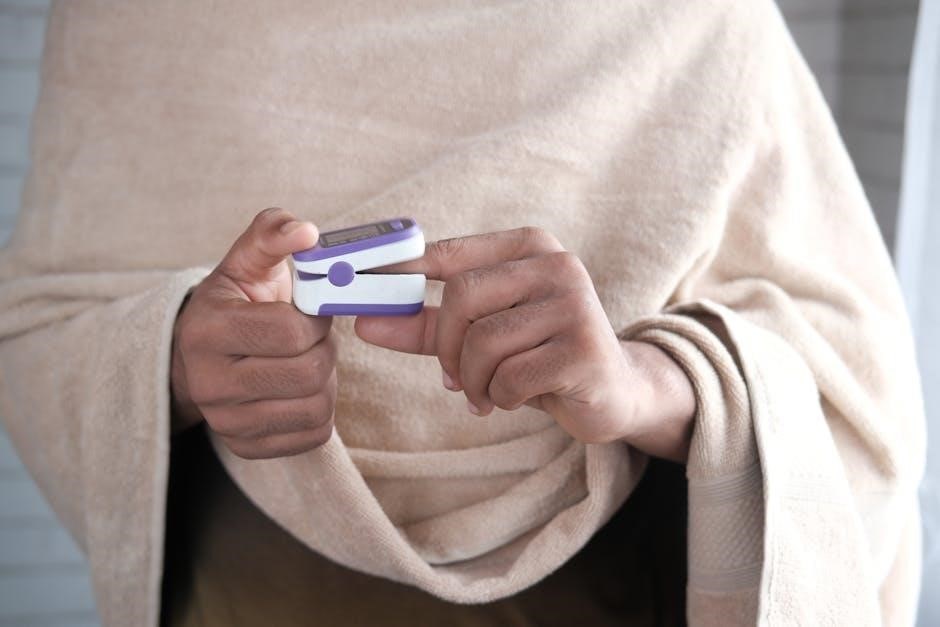
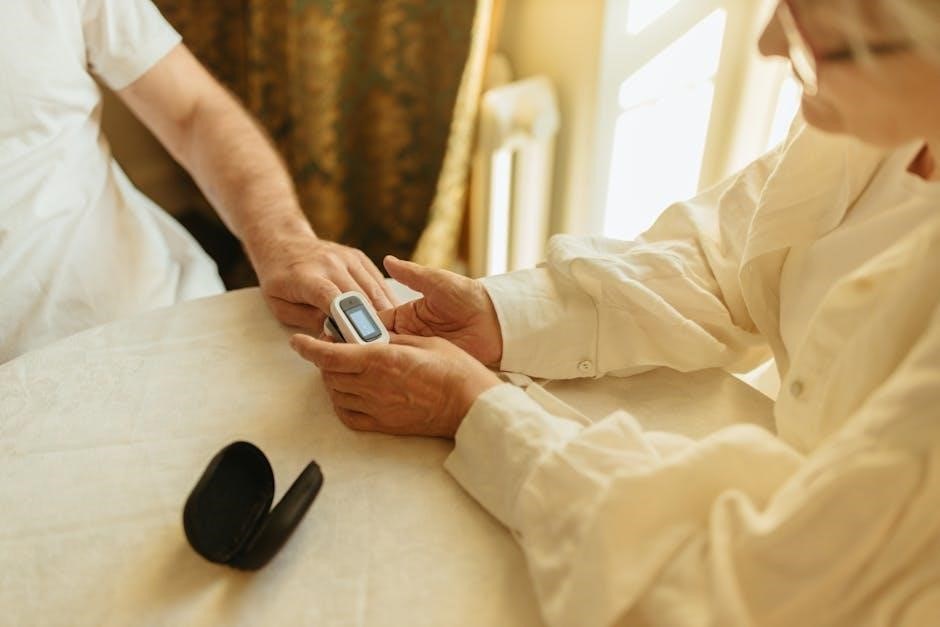
Achieving accurate pulse oximetry readings hinges on correct finger placement. The finger should be clean, dry, and free of nail polish, as these can interfere with light transmission. Optimal placement involves inserting the finger fully into the sensor, ensuring it’s aligned with the light source and detector.
Avoid using fingers that are cold or have poor circulation, as this can lead to inaccurate SpO2 values. Referencing a pulse oximeter readings chart (PDF) won’t help if the initial measurement is flawed. The chosen finger should be relatively still during the reading.
Consider that thumb and index finger placement can sometimes yield slightly different results due to varying blood flow. If initial readings seem questionable, try a different finger. Consistent technique is key to reliable monitoring and meaningful data interpretation.
Advanced Considerations
Utilizing a detailed pulse oximeter readings chart (PDF) alongside clinical judgment provides a more nuanced understanding of a patient’s respiratory status overall.
Pulse Oximetry in Specific Medical Conditions (Asthma, COPD)
For individuals managing chronic respiratory conditions like asthma or Chronic Obstructive Pulmonary Disease (COPD), consistent pulse oximetry monitoring, aided by a readily accessible pulse oximeter readings chart (PDF), becomes particularly crucial. These charts help patients and clinicians establish personalized baseline oxygen saturation levels, recognizing that ‘normal’ can vary significantly based on the severity of their condition and long-term adaptation to lower oxygen levels.
Asthma exacerbations often present with rapid declines in SpO2, making frequent monitoring essential for timely intervention. A PDF chart allows for quick reference to identify concerning trends. Similarly, in COPD, where chronic hypoxemia is common, tracking SpO2 helps determine the effectiveness of supplemental oxygen therapy and prevents over-oxygenation, which can suppress the respiratory drive. Understanding individual target ranges, visualized on a chart, empowers proactive self-management and facilitates informed discussions with healthcare providers.
Limitations of Pulse Oximetry
While pulse oximetry is a valuable tool, it’s crucial to acknowledge its inherent limitations, even when utilizing a pulse oximeter readings chart (PDF) for reference. These devices don’t measure oxygen content directly, but rather estimate oxygen saturation based on light absorption. Factors like poor peripheral perfusion (cold hands, low blood pressure), nail polish, dark skin pigmentation, and carbon monoxide poisoning can significantly impact accuracy, leading to falsely low or high readings.
A PDF chart displaying typical ranges shouldn’t be interpreted as a definitive diagnosis. Pulse oximetry cannot assess ventilation (how well you’re breathing) or detect conditions like hypercapnia (high carbon dioxide levels). Relying solely on SpO2, even with a chart, can be misleading. Clinical assessment, including observing breathing patterns and listening to lung sounds, remains paramount. Always correlate pulse oximetry readings with a patient’s overall clinical presentation and consult a healthcare professional for accurate diagnosis and treatment.
The Future of Pulse Oximetry Technology
Innovations are continually refining pulse oximetry, moving beyond traditional finger-clip devices. Researchers are developing wearable sensors integrated into smartwatches and clothing, offering continuous monitoring and trend analysis – potentially augmenting the utility of a static pulse oximeter readings chart (PDF). Advancements in signal processing algorithms aim to mitigate the impact of motion artifact and improve accuracy in diverse populations, including those with varying skin tones.
Furthermore, multi-wavelength spectroscopy is being explored to differentiate between oxyhemoglobin and carboxyhemoglobin, addressing the limitations of current devices in carbon monoxide detection. Telemedicine applications are expanding, allowing remote patient monitoring and data transmission, with readings easily compared to established charts. The future envisions personalized algorithms tailored to individual physiological characteristics, providing more precise and reliable oxygen saturation assessments, ultimately enhancing patient care and proactive health management.